
Hoppers (2026) Film Review: Wacky Pixar comedy lacks creative flair and coherent focus
- reeltalkin'

- Feb 28
- 5 min read


Nineteen-year-old Mabel uses state-of-the-art technology to transfer her consciousness into a lifelike robotic beaver to communicate with the local animals and save their natural habitat from destruction as plans for completing a new highway are underway.
Hoppers (2026) is the latest Disney/Pixar animated collaboration, directed by Daniel Chong, the mind behind the endearing, endlessly charming We Bare Bears (2014 - 2019), who co-wrote the screenplay with Jesse Andrews (Luca, 2021; Elio, 2025).
The film features an ensemble voice cast, with Disney regular Piper Curda leading as a slightly chaotic yet well-meaning teen with a passion for nature and wildlife, supported by Bobby Moynihan, Jon Hamm, Meryl Streep and Dave Franco.
This movie is a prime example of when the final product perfectly matches the inciting tone of its trailer, which promised plenty of fun, manic animal adventure and high octane energy.

The film exhibits quirky characters, flashy action-oriented set pieces, and outlandish critter hijinks, whilst also attempting to cram in a meaningful message about preserving nature and preaching harmony between the animal kingdom and the world of humans.
It is messy and overstuffed with hints of a great movie layered in between thick slices of colourful spectacle and convenient plot contrivances, which fail to make viewers truly connect with its characters on a deep, emotional level.
With so many narrative threads to juggle, the movie ultimately becomes a confused mashing together of several different ideas. When regarding the entire film as a whole, it genuinely feels as though Chong and Andrews put their heads together and threw loads of potential ideas at the wall, hoping that some would stick and form into a clear, coherent narrative.
The film is high on an insane sugar rush throughout, constantly riding a wave of frenzied energy, whilst expecting viewers to simply accept the events unfolding and never stop to question anything.
The movie often contradicts its own pre-established lore or story logic, and some plot points are abandoned altogether as new ideas take over narrative progression. It is not a good sign when, after leaving the cinema, one is left questioning many aspects of the movie's bizarre choices regarding its structure and characters.
For example, Mabel is shown to live with her overworked mum during the flashback framed opening; however, after moving in with her like-minded grandmother, the mother is never mentioned or referred to again.
The screenplay is so packed that it simply does not have the time to include any further detail regarding Mabel's homelife, which may have been a useful addition to help viewers better connect with her character.
It is also difficult to interpret who the movie is generally aimed at. When going by the marketing, it clearly wishes to appeal to families and children; however, there are a handful of visual references and callbacks to classic horror movies with some scary imagery, which will arguably be too frightening for those with younger children.

On the other hand, the comedy is generally quite juvenile and cartoonishly over the top for adults to take seriously. There are definitely successful moments of humour here for audiences of all ages, yet many of the attempts for laughter or tears come across as more emotionally manipulative than genuine and sincere.
The movie heavily relies on its overabundance of cute animals and our natural tendency to sympathise with their innocence to build an artificial sense of emotional involvement with the characters.
The film also feels far too safe and predictable for the usual Pixar standards, a studio whose films, particularly from its early era, often push the boundaries of what animated movies could do, offering rich, mature thematic storytelling which could appeal to both adults and kids.
This movie follows the typical narrative clichés audiences can come to expect with a traditional formula, where the lead is somewhat of an outcast who always seems to do the wrong thing, resulting in a big fallout, only for everyone to come together in the end and work together to save the day.
Without trying to sound like a cynical grown-up, everything wraps up just a bit too perfectly and Mabel, despite featuring a talented voice actress breathing plenty of life into the role, ultimately comes across as unintentionally unlikable, as she does not really face major consequences for her constant interference and deception of other characters.
Of course, her noble intentions to preserve her grandmother's legacy through nature are a solid message for younger viewers to latch on to; however, the actual execution of this does become muddled and inconsistent.
All of this constant noise and persistent fast momentum results in the quieter, introspective moments being all the more admirable and sorely missed when gone. Pixar works its magic with lush, picturesque scenes highlighting the raw power of what nature can do to soothe even the most enraged spirit, which is beautifully communicated early on in the film as Mabel is comforted by her wise, empathetic grandmother.
There are a few too many call-backs to these tranquil moments by the glade, however, the film desperately needs these scenes where it allows itself to simply stop, breathe and have faith that viewers will remain immersed and engaged in its story.
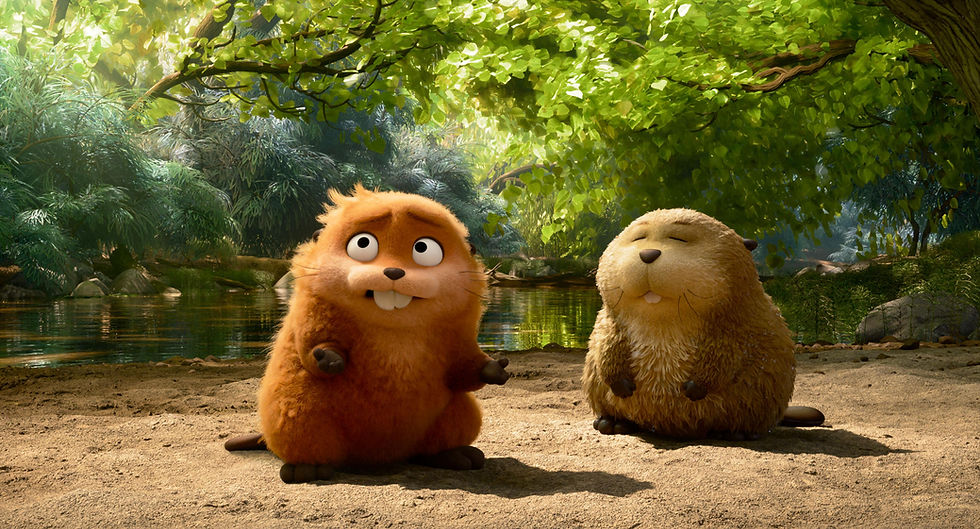
The vast majority of the movie, for lack of a less blunt way of phrasing it, is akin to dangling a shiny set of keys in front of a toddler in a desperate attempt to keep them entertained for a short period of time; therefore, these reflective, character-focused moments are where the emotion feels less forced and more earned.
Overall, Hoppers unfortunately stacks up as one of Pixar's weaker outings in its extensive catalogue. The film lacks the creative spark of imagination which permeates many of the studio's previous projects, and its messy, unfocused screenplay definitely could have gone through a few more edits to alter its mediocre reception.
Sadly, this is quite an underwhelming and disappointing effort from the creators of arguably one of the best animated kids' shows of the 2010s, in We Bare Bears. The film is far from an absolute disaster and decent enough for an entertaining family outing, yet it overall pales in comparison to previous Pixar greats.
Check out the trailer for Hoppers (2026) below, and please let me know your thoughts in the comments!

Comments