
28 Years Later (2025) Film Review: Gritty coming-of-age drama with chilling rage-infected threat
- reeltalkin'

- Jun 20, 2025
- 4 min read

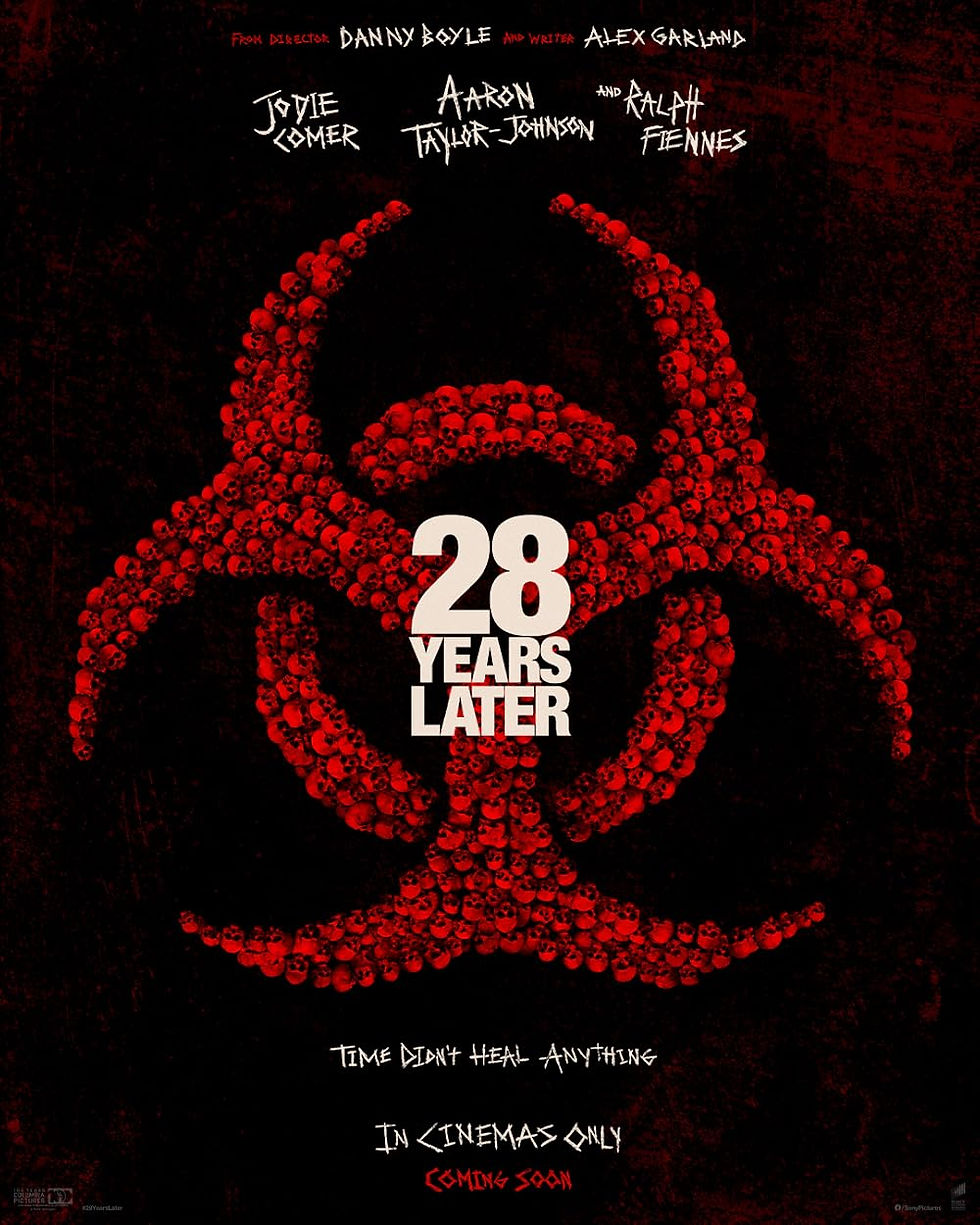
The highly anticipated follow-up to Danny Boyle's largely influential 28 Days Later (2002) has finally hit cinemas this week. Other original contributors, such as writer Alex Garland (Ex Machina, 2014; Warfare, 2025) and cinematographer Anthony Dod Mantle, also return for the third installment in the franchise.
The sequel was shot back-to-back with 28 Years Later: The Bone Temple, directed by Nia DaCosta (Candyman, 2021; The Marvels, 2023), which is set to be released early next year.
In the film, the Rage Virus has now been eradicated in Europe, and Great Britain has been placed under quarantine. A community of survivors has sought refuge in an island village separated from the mainland by a tidal causeway.
Our story focuses on scavenger Jamie (Aaron Taylor-Johnson), his terminally ill wife, Isla (Jodie Comer), and their twelve-year-old son, Spike (Alfie Williams), who is taken to the mainland by his father as a coming-of-age initiation to kill his first infected. Following on from this, Garland's ambitious, bold screenplay invites us into a world full of horror and discoveries, with plenty of thought-provoking thematic explorations to boot.

The movie was mostly shot using an iPhone 15 Max, with behind-the-scenes photographs showcasing the innovative, clever techniques used on display, as well as shooting in the more traditional sense with digital and film cameras and drones. Great care has clearly been taken to recapture the frantic, grainy visual aesthetic of the original movie, with lots of shaky cam and jolting, hyperactive edits at play, particularly when our characters are being chased and hunted down by the infected.
The film feels tactile and visceral, even with its often stylised cinematography and inventive infra-red, surreal sequences depicting the infected taking part in sinister, ritualistic kills of wildlife. As alluded to in the trailer, there are some beautifully haunting shots, such as the image of a group of seemingly evolved infected donning an early evening skyline, or a larger 'alpha' leader frantically howling at the moon.
Garland conjures up captivating world-building, with the first act effectively setting up the almost primitive reality of life in a post-apocalyptic world, introducing new interesting developments to how the infected have mutated over time. The safety and community spirit of the village evokes a similar feeling to that of the first and second world wars of the twentieth century, as well as medieval times, which is rather obviously presented to viewers with a series of archival film footage showcasing humanity's reversion to bows and arrows for weaponry, and a generally more simple existence.
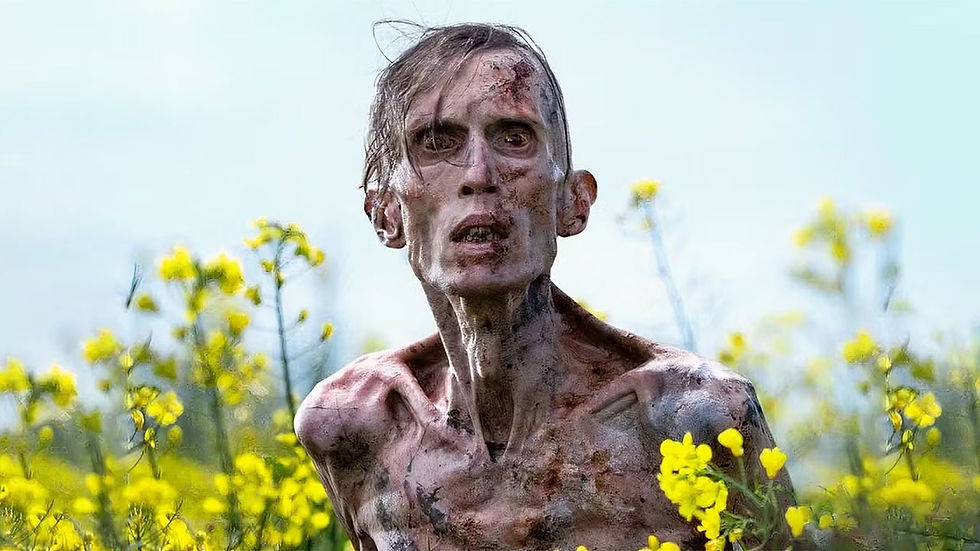
The clear danger and malevolent threat of the creatures prowling the main island make for a thrilling adversary, with the make-up team once again doing a fantastic job with the multitude of infected evolutions, creating a terrifying, grotesque sense of consistency.
One of the most notable highlights of the movie comes from the outstanding performance by young Alfie Williams. We have already witnessed the dynamic talent of a rising child star this year with Owen Cooper in the critically acclaimed Netflix crime-drama Adolescence (2025), so it seems we are in an exciting casting chapter! Williams more than holds his own against his experienced adult co-stars, and for a film with such dark subject matter, with the character of Spike being forced to grow up quickly, in this hostile world, Williams ends up carrying most of the movie on his shoulders, and he never falters. The natural authenticity which he brings to the role, as well as a quiet strength, is palpable, and he is definitely one up-and-coming talent to keep an eye on.
Both Comer and Taylor-Johnson are reliably solid in their respective roles, and Ralph Fiennes as the eccentric Dr. Kelson brought a layered, charismatic presence to the film, and he certainly seemed to be enjoying his involvement in the production immensely!
Despite there being plenty of positive qualities to the movie, it does sometimes falter under the weight of its rich screenplay and execution of all of its ideas. It does subvert initial expectations of a father/son-led mission into the mainland, which, in reality, only occupies the first act of the picture. The relationship between Spike and his mother becomes the central focus, with elements of religion, death, hope, and many more themes explored throughout the latter half. There are recognisable motifs to other post-apocalyptic/dystopian narratives here, such as the miracle of new life signifying the possibility of a better future and religious undertones, with divine forces bringing about a 'Judgment Day' scenario, which has resulted in the destruction of humanity.

Although these narrative threads are certainly interesting in concept and some practice, the film does largely feel like setup for the already filmed sequel, and there is an uneven dissonance of tone at points. Some attempts at humour and exaggerated satirical moments did feel out of place, especially regarding its bizarre, likely controversial ending (NO SPOILERS!), which admittedly does arouse intrigue for where the story will take us next.
Overall, although there are a couple of noticeable issues regarding tone and struggles to balance all of its deep, complex ideas, 28 Years Later boasts plenty of solid attributes that make it worth the long wait. The film exhibits energetic pacing, delivers on the intense, unsettling aesthetic of the original, and features a stellar performance from its young lead.
If you are a fan of this (very British!) franchise, the film is definitely worth seeing on the big screen and will offer an eclectic blend of brutal, gory zombie action all of us horror junkies love, as well as thoughtful subtext.
Check out the (awesome!) trailer for 28 Years Later (2025) below, and please let me know your thoughts in the comments!

Comments